Hardwood Online College Basketball
A free, ad-free college hoops world where recruiting is the whole game and every rival is a person. It looks like 2009 and plays like a lifelong hobby.
Score
The verdict
The deepest free online college basketball manager we know of: a pyramid of real schools, a recruiting war against human coaches, detailed game plans and no ads or purchases at all. The interface is dated, there are no trades or contracts, and nothing can be changed during a game.
The good
- Recruiting is a real strategic war: points, scholarships, geography, prestige and playing time, contested by human coaches
- Scouting fog by design: displayed ratings can be up to 20% off and sharpen as a player logs games
- Detailed game plans: pace, inside/outside, man/zone/press mix, defensive extension, four substitution patterns, halftime adjustments
- Per-player controls: green light, offensive positioning, minutes targets, foul-trouble hook, redshirt
- Promotion and relegation across a pyramid of 16-team conferences, three divisions and 64-team tournaments
- Entirely free with no ads and no purchases; the official rules ban buying or selling anything
The bad
- No trades, transfers, contracts or budget: the front office is recruiting and coaching staff
- No in-game intervention: halftime adjustments must be preset
- A 2009-era desktop web interface with no app and dense, sometimes unexplained tables
- Scoring in our sample ran about 7 points above real Division I averages
- One developer runs everything; bug threads and feature requests can stay open for years
- Teams are dropped after 35 days of inactivity, so it asks for steady attention
Who it’s for
- College basketball fans who love recruiting more than salary caps
- Players who want a slow-burning online hobby with daily games and human rivals
- Anyone looking for a completely free manager game with no monetization at all
Who should skip it
- NBA-style GMs who want trades, free agency and cap puzzles
- Coaches who want to call timeouts or change tactics live
- Players who need a modern mobile interface
Every college basketball fan knows the real season starts on signing day, not on opening night. Hardwood Online College Basketball is built around that idea. You don’t trade for anyone, you don’t sign free agents and you don’t manage a salary cap. You take over a real school, from UCLA to a Division III program in Vermont, and you win by persuading teenagers to choose you over the human coach two states away. Then you develop them, set a game plan, and watch them graduate four years later.
It runs in a browser, it costs nothing, it shows no ads, and one person has been building it since 2017. It looks like the internet of 2009, and its clock never stops: one game day every real day, all year. Of all the online basketball managers we have covered, it is the one most likely to become a habit you keep for years.
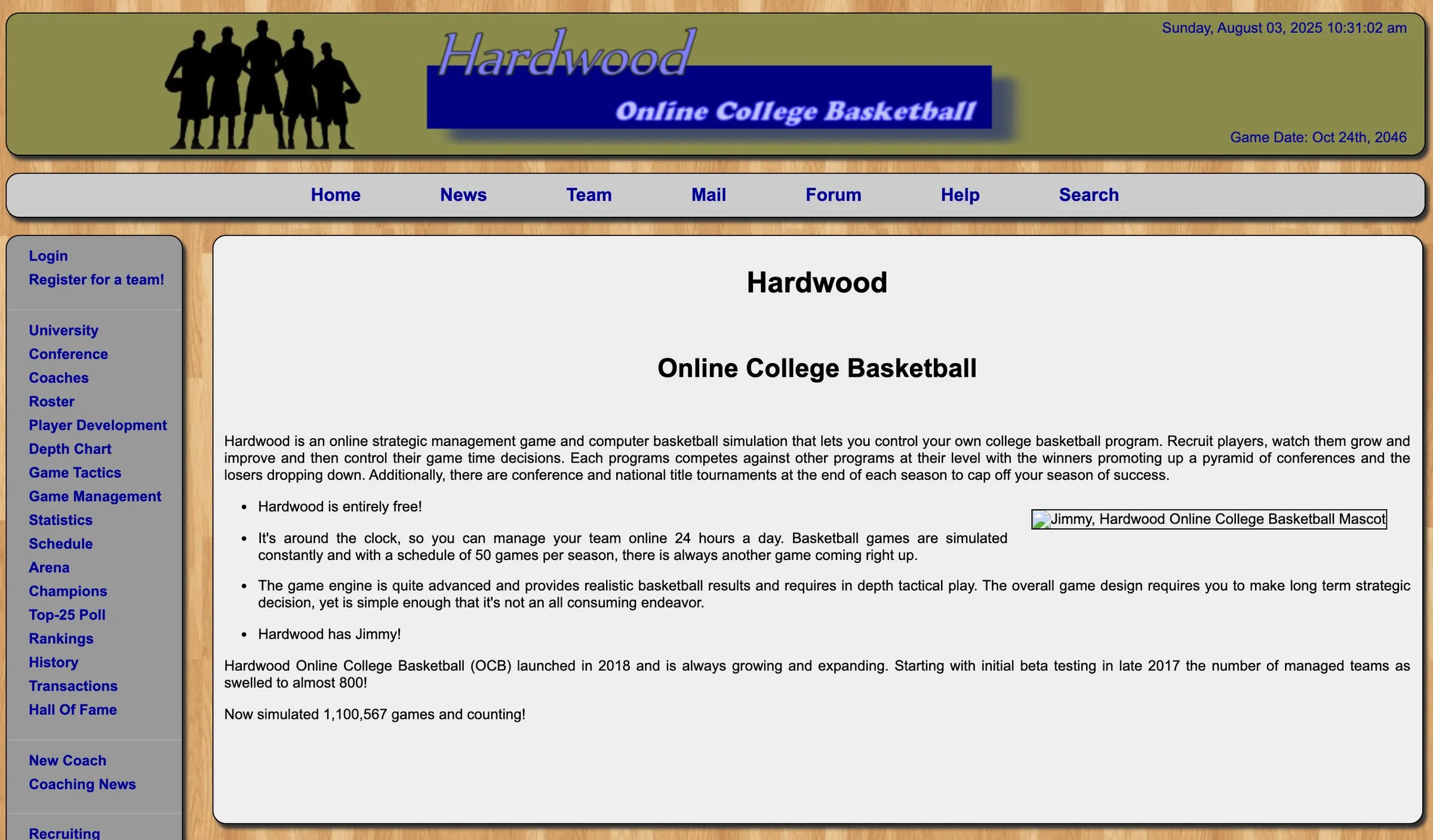
The public home page in August 2025: “almost 800” managed teams, 1,100,567 simulated games and a game date of October 24, 2046. The left menu is the whole game, from Depth Chart to Prospect Search. Capture: our headless Chrome, Wayback Machine snapshot of onlinecollegebasketball.org.
The short version
- Play it if recruiting is your favourite part of college basketball and you want human rivals, daily games and a long-term program to build, for free.
- Play it if you like setting a game plan in detail (pace, zone and press mix, substitution patterns, halftime triggers) and then living with the result.
- Skip it if you want trades, contracts, cap space or a modern mobile interface. None of those exist here.
- Skip it if you can’t log in at least every few weeks. Teams are reclaimed after 35 days of inactivity.
How we researched this review
We did not play Hardwood with our own team. Getting a program requires registering an account, and our rules forbid that. Most of the game is public, though, and that is how we researched it.
- Hands-on capture of public pages. The live site, onlinecollegebasketball.org, now sits behind a Cloudflare security check that blocked our automated browser when we tried on November 14, 2026, so we could not capture it live. Instead we rendered the Internet Archive’s snapshots of the official public pages (June to August 2025) in headless Chrome. Those snapshots include the rules manual, newbie guide, news, events calendar, forum indexes, UCLA’s team, roster, coaches, development, depth chart, schedule, statistics, history and arena pages, conference standings, top recruits, the pro draft and the champions list. Every screenshot in this review comes from those captures and is labelled as such.
- What we could not see. Pages that need a login: the game tactics and game management screens (the archived page simply says “To set-up depth chart or game plan, you must be logged in”), the recruiting screen, individual box scores and the play-by-play viewer. Everything we say about those systems comes from the official rules and from developer and player posts on the official forum.
- What we could not verify. Whether the site’s state in November 2026 matches August 2025. The domain was online and served its Cloudflare check on November 14, 2026, but the most recent snapshot we could read is from August 2025. Where numbers come from those snapshots, we date them.
- Status check. We searched the App Store, Google Play and Steam and found no Hardwood Online app. Two games with similar names are unrelated: Hardwood Basketball Manager on Steam (Mythic Flux Foundry, April 2026) and Hardwood Empire on iOS (Finn Keating, free with ads). Neither page mentions onlinecollegebasketball.org.
A season, step by step
Hardwood runs on a shared real-time calendar. Everyone plays the same season at the same time, and the game date is shown in the top corner of every page. Here is how a season unfolds, put together from the rules, the events calendar and UCLA’s archived 2046 schedule.
1. The season flip. A new season starts with a site-wide “flip”. The news post of July 26, 2025 says: “You can begin recruiting new players, shuffling your assistant coaching staff, and finalizing your depth chart. Exhibition games kick off on Monday.” Seniors graduate, redshirts are applied, committed recruits join your roster, walk-ons arrive (you don’t choose how many), and promotion and relegation take effect.
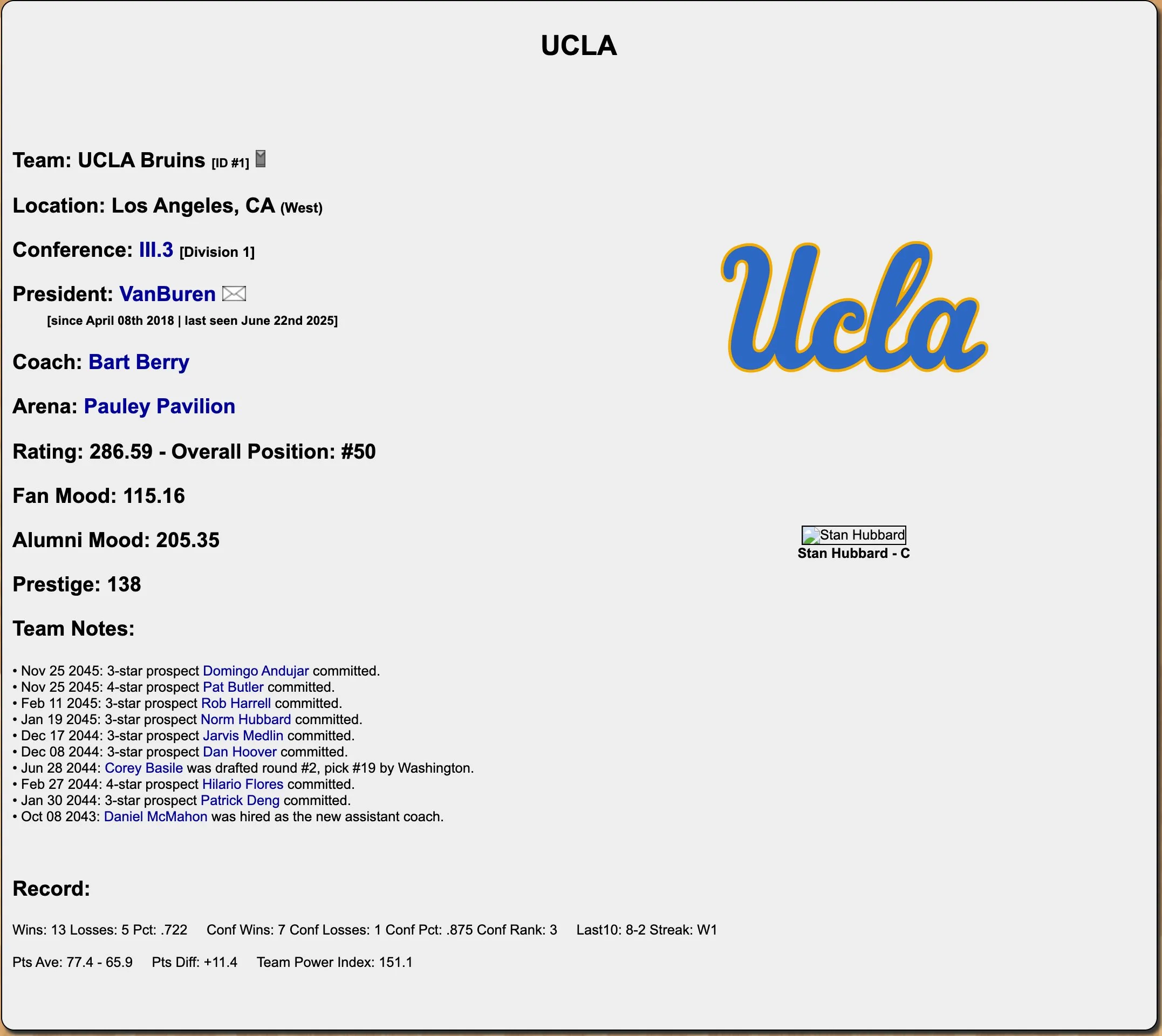 A program’s public front page: UCLA in conference III.3 (Division 1), human president VanBuren since April 2018, rating 286.59 (#50 overall), fan mood 115.16, alumni mood 205.35, prestige 138. The team notes read like a recruiting diary. Capture: our headless Chrome, Wayback Machine snapshot (June 2025).
2. Preseason housekeeping. The official newbie checklist says to update your depth chart, set your default game tactics, set each player’s individual controls, check your conference, and start recruiting with your new points. This is also your window for staff changes. Assistants can only be replaced before conference play starts or after the season ends, and only one coach can be hired per calendar day.
3. Exhibitions. UCLA’s 2046 schedule opens with three exhibition games (against Cal Poly, Redlands and USC). They don’t count, but the rules say they “provide minutes towards player development”.
4. Ten non-conference games. These are partly up to you. You can name four rivalry opponents (both schools must list each other if both are human-managed) and choose a scheduling mode: “Up” for higher conferences, “Down” for lower ones, or “Any”. These games feed your RPI and strength of schedule, which decide tournament bids. That makes scheduling a strategic choice, not a formality.
5. Thirty conference games. Each conference has 16 teams that play each other home and away. The standings decide your conference title, your seeding and whether you go up or down: top three promoted, bottom six relegated, ties broken by point differential.
6. Daily rhythm. The archived events calendar for August 3–8, 2025 shows the real-world clock. A “Game Day Simulation” runs at 9:00 am Pacific every day, followed by “Recruiting Processing” and a second “Game Day Simulation [Xtra]” at 11:00 am. Twice a week, on Thursday and Sunday mornings, a block of updates (setup, development, player, recruit rankings, team) runs, and the game sets depth charts and controls for bot teams. In UCLA’s schedule, game days ran on consecutive real days from June 2 to July 14, 2025.
7. Conference playoffs. All 16 teams play a four-round single-elimination bracket seeded by conference record. For conference levels I–IV, the winner gets an automatic bid to the national tournament. Level V and VI winners go to the Division 2 and Division 3 tournaments.
8. The tournaments. There are three 64-team, six-round single-elimination tournaments: Division 1 (levels I–IV), Division 2 (level V) and Division 3 (level VI). At-large bids depend on RPI, conference level and conference finish. Teams that miss out play invitational groups of four and then a four-team bracket. The 2046 final, on July 24, 2025, was decided by a buzzer-beater from 25 feet. The New Orleans Privateers beat Cal Poly Pomona for the program’s first title, and the site celebrated with a news post titled “NOHO Miracle!”.
9. Recruiting, all season long. Recruiting runs alongside the games for 53 updates, one after each game day. You get a large lump of points at the start and two more per update, and you spend them on contacts. High school seniors start committing from the fifth update. Junior college and international players commit later. On update 53, any remaining prospects with an offer commit, go to junior college, walk on somewhere, or quit basketball.
10. Offseason. Players age one year, physical attributes grow, seniors graduate and the best go into a simulated pro draft. Your redshirt choices are applied at the flip if the box was ticked. Then it starts again. A full season, from exhibitions to the title game, took about eight real weeks in mid-2025.
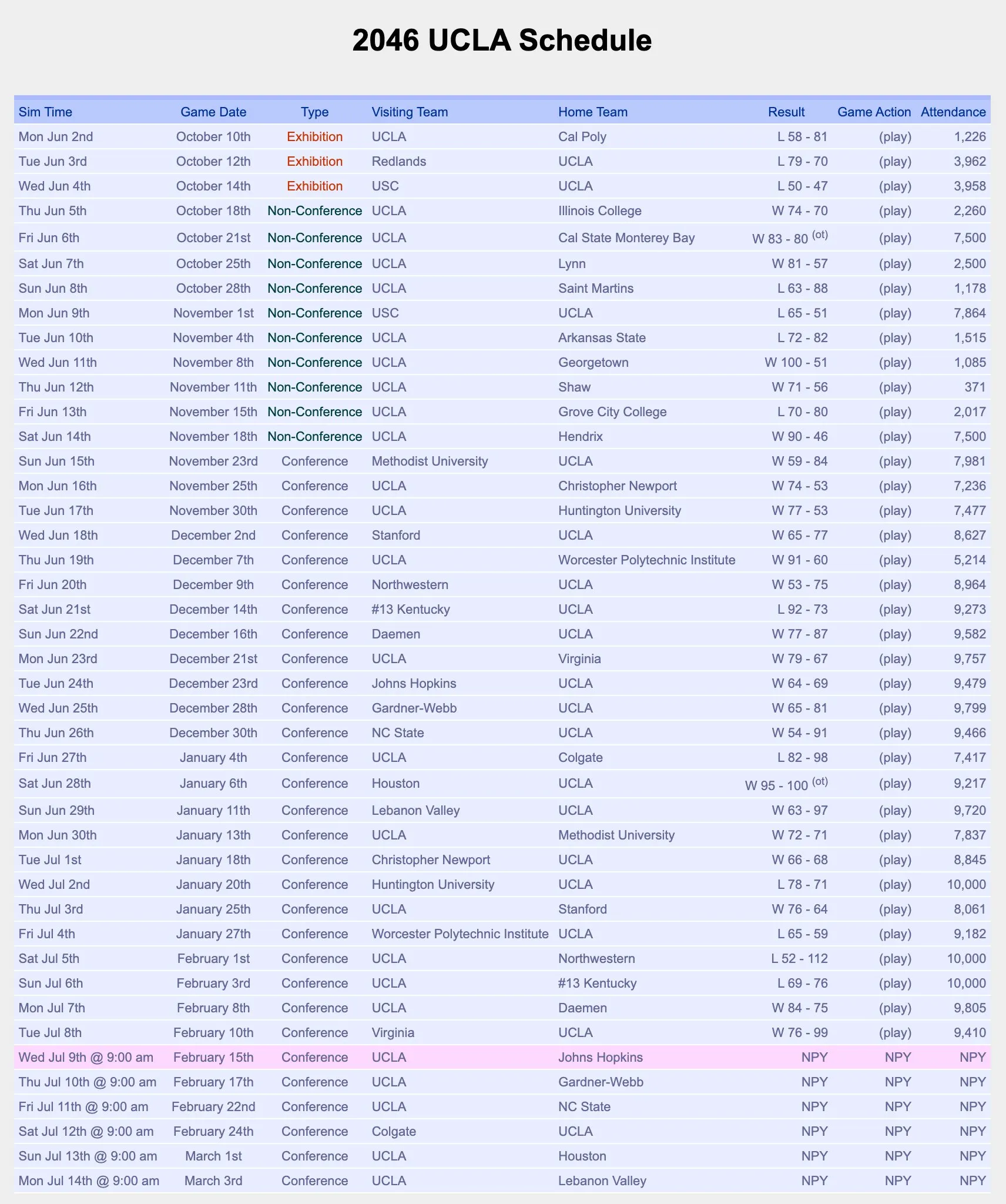 UCLA’s 2046 schedule, captured on July 8, 2025. The left column is the real day each game was simulated (Mon Jun 2 to Mon Jul 14). Attendance moves with results and opponents, from 371 at Shaw to sell-outs of 10,000 at Pauley Pavilion. Capture: our headless Chrome, Wayback Machine snapshot of the official site.
The match engine
What it is. Hardwood is a text simulation. The rules call it “an online strategic management game and computer basketball simulation”, and the home page promises an engine that is “quite advanced and provides realistic basketball results and requires in depth tactical play.” Games produce box scores and a play-by-play: the schedule links every game to a box score and a “play” viewer, and the newbie guide says you can “click on Play and let the game unfold before you!”. A bug thread from January 2025 titled “pbp shot-clock error” confirms the play-by-play tracks the shot clock. We could not open any box score or play-by-play, because none were archived.
What it models. Even without the viewer, the rules document a lot of engine behaviour:
- Fatigue has four levels (none, light, moderate, heavy), shown in the box score. It “will affect all facets of the game” and lowers defensive effort late in games.
- Overwork is the clever part. Players who log close to 40 minutes a game, or who play through heavy fatigue, “will see their performance decline in subsequent games”, and the drop lasts until the end of the season. Riding your starters has a long-term cost.
- Foul trouble is handled through a per-player hook. A 2019 engine update made players “foul less while in foul trouble, but defense suffers”.
- Position experience matters. Players are better at positions they have played. Upper-case positions on the player page mean more experience, and minutes at a new position slowly expand that list.
- Injuries can happen to anyone who plays. The engine then pulls the next player from the depth chart.
- Overtime ignores playing-time limits.
The stats it produces. UCLA’s archived 2046 statistics page tracks a lot: games, starts, minutes, field goals, threes and free throws, plus columns labelled DIST, PITP and FBP (apparently shot distance, points in the paint and fast-break points), offensive and defensive rebounds, assists, steals, blocks, OFG, turnovers, fouls, disqualifications, fouls drawn, usage rate, injuries, plus/minus and Player of the Game awards. OFG is opponent field-goal percentage, a defensive stat the developer added in August 2019. The rules glossary also lists eFG% and points per possession. The site map lists a shot chart page for each game.
Realism: what our sample shows. We compared Hardwood’s archived scoring with real college basketball. The comparison is limited because we only have public pages, not a league-wide stats export.
| Scoring sample | Points per team per game |
|---|---|
| Hardwood conference I.1, 2046, conference games only (16 teams, about 25 games each) | 79.7 (range 66.3–94.6) |
| Hardwood conference I.1, 2046, all games so far (about 35 each) | 83.2 |
| UCLA (levels I–III), seasons 2037–2046, points for / against | 76.6 / 72.1 |
| Real NCAA Division I, 2024-25 (364 teams, TeamRankings, through April 8, 2025) | 72.6 (median 72.3) |
The top conference scores about seven points per team more than the real Division I average in league play. A mid-level program like UCLA sits closer, about four points above. Part of the gap can be explained by talent: level I is the best of a pyramid, and our real-world figure includes the weakest Division I teams. Still, the signal is consistent. Hardwood plays a little faster or more efficiently than real college basketball. The 2046 title game, according to the news write-up, was tied 96-96 with under 30 seconds to go before a 25-foot buzzer-beater. Early-season polls also show non-conference blowouts across tiers: 131-71, 95-39, 101-60. That is what happens when a promotion pyramid meets a schedule that lets you pick “Down” opponents.
The individual numbers are more convincing. UCLA’s centres Stan Hubbard and Landry Krueger each averaged 17.7 points on about 62% shooting with almost no three-point attempts. That fits a team whose bigs are set to play inside, and it shows offensive positioning working as described.
Known engine complaints. The longest bug thread in the archive (85 posts, June 2023 to May 2025) is titled “where is the logic, math?!”. A Help thread from May 2025 asks “Why does my team absolutely stink some days.” Another asks how driving and finishing actually work in a game, and the admin answered it in April 2025. Most of those threads were not archived in full, so we can’t tell you what was decided. The pattern is familiar from every text sim: results look streaky, and players want more transparency. The rules’ own “Game Engine Algorithm Discussion” section still reads “To Do…” for both substitutions and halftime adjustments.
Coaching and tactics
This is where Hardwood beats most browser managers, and where college basketball lends itself to a text sim. There are three layers: the game plan, per-player controls and the coaching staff.
The game plan (team tactics). You set it as a default and can override it for any game. According to the rules it covers:
- Pace. Positive is faster, with more transition and less shot clock used. Negative is slower.
- Inside/outside emphasis. Where the offense tries to get its shots.
- Defense selection. A percentage mix of man-to-man, zone and pressure. You don’t pick one; you set proportions.
- Defense extension. How far the defense stretches toward the perimeter versus packing the paint. The rules note that defenses also adjust on their own during a game based on what the opponent is hitting.
- Substitution mode. One “mass” pattern (all starters rest in minutes 7–15 of each half) and three staggered patterns with documented windows. Pattern B, for example, rests PG and C in minutes 18–11, SG and PF in 12–5, and SF in 15–8, so “key” positions are always covered. Pattern C uses shorter, split bench stints.
- Halftime adjustments. Conditional changes triggered by the score margin “or other factors” at halftime. Only the first adjustment whose threshold is met is applied.
Per-player controls (Game Management).
- Green light. From shoot whenever he wants to never shoot.
- Offensive positioning. Inside, intermediate or outside. This lets you build hybrids: the rules give the stretch four as an example, and say guards set to “I” drive more and avoid the arc.
- Playing time. The top setting targets about 40 minutes, the middle about 32, and the lowest recommended about 25. Starters have a 15-minute floor, and 0 means a redshirt.
- Foul-trouble hook. How quickly a player sits when he gets into foul trouble.
- Redshirt checkbox. It caps a player at five games, and the redshirt is applied at season’s end. A 2019 rule change made the engine respect this more strictly.
The depth chart. You fill in starters plus backups by position. The rules spell out the engine’s fill order (PG, C, PF, SF, SG) and explain how a shared backup is resolved. The depth chart page also shows the starting five’s average height, weight and age.
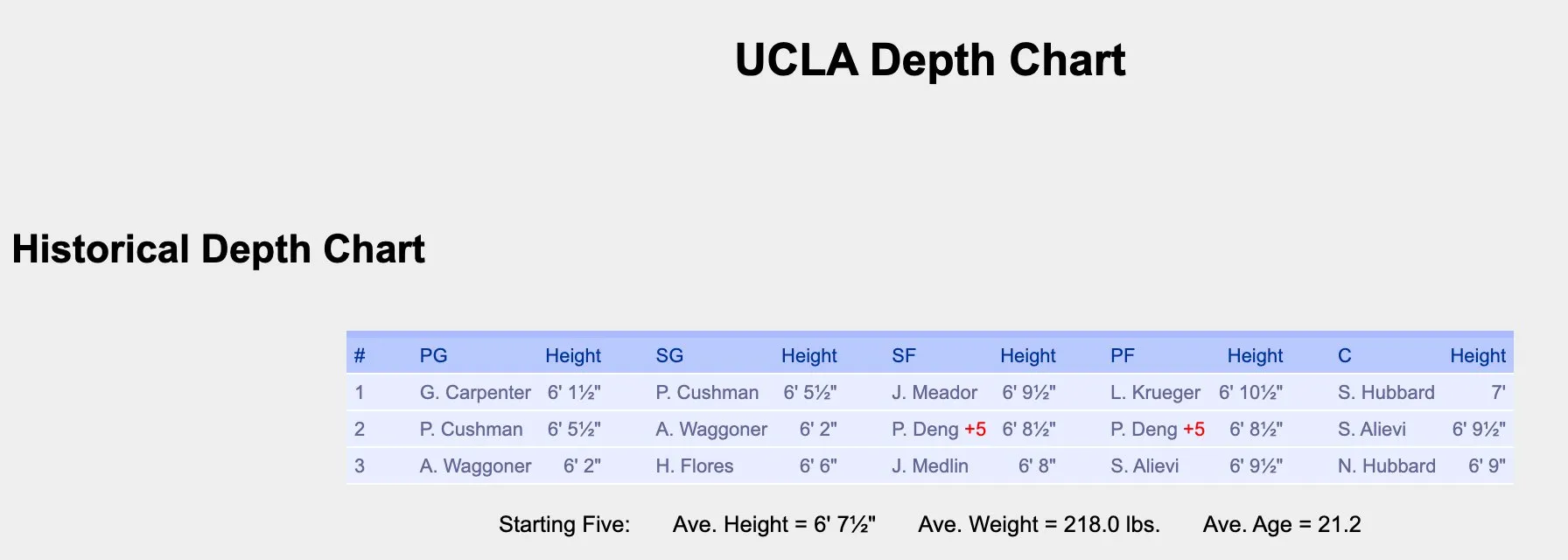 UCLA’s depth chart: three deep at every position, with the same redshirt freshman, Patrick Deng (the red “+5” next to his name is not explained on the page), listed at both SF and PF. The starting five averages 6’7½”, 218 lb and 21.2 years. Capture: our headless Chrome, Wayback Machine snapshot.
Training. Players get coaching in all areas. You choose a primary and secondary coaching focus, and you can add one of eight extra training options: post moves, shooting, foul shooting, ball handling and passing, video and film work, defense, fitness and strength. The rules are honest that these give “a small bonus”. Most improvement comes from coaching updates (twice a week) and minutes played.
The staff. A head coach and three assistants, each rated on offense, defense, game tactics, recruiting, motivation and player development. Head coaches decline somewhere between 55 and 70. Assistants add to the head coach’s skills in a weighted way, and they leave to become head coaches once they pass $1M in salary or 50 years of age. Firing your head coach “will have a dramatic effect” on prospects he was recruiting, because the relationship is with him.
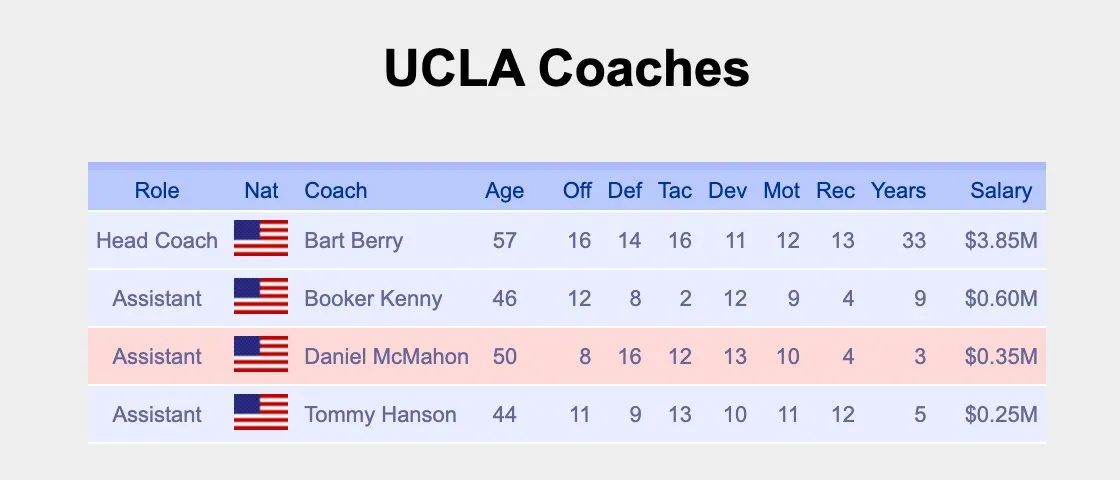 UCLA’s staff: head coach Bart Berry (57, 33 years of experience, $3.85M) rates 16 on offense and tactics but only 11 on development. The highlighted assistant, Daniel McMahon, brings the 16 in defense the head coach lacks. Capture: our headless Chrome, Wayback Machine snapshot.
What is missing compared with the best in the genre. There are no plays or sets: no pick-and-roll frequency, no motion or post-up packages. Offense comes down to pace, shot location and individual green lights. There are no matchup assignments and no closing lineups. Above all, there is no live intervention. A player put it plainly in a 2019 thread: in other games “you can make changes within the game while it is being played while in HW you can only do that at halftime and it needs to be preset.” In a shared world that simulates hundreds of games at 9 am Pacific, that is a design constraint, not an oversight. But it means your coaching is all preparation.
Players and ratings
The attribute model. Each player has 14 skills in four groups, all shown on the roster:
| Group | Skills (abbreviation) |
|---|---|
| Offense | Inside Shot (IS), Outside Shot (OS), Range (Rng), Finishing (Fin) |
| Defense | Rebounding (Reb), Interior Defense (IDef), Perimeter Defense (PDef) |
| Basketball | Basketball IQ (IQ), Passing (Pass), Handle (Hnd), Driving (Drv) |
| Physical | Strength (Str), Speed (Spd), Stamina (Sta) |
On top of those come height, weight, wingspan, vertical and shooting hand, a 0–5 star recruiting rating, a written recruiting evaluation, a Skill Index (SI, the sum of the skills) and a Potential value.
Potential and progression. Each skill has a base and a potential. A player’s current value moves between them through coaching and experience. Coaching works best on young players. Experience comes from every minute played, plus a base amount for practising. Some skills start closer to their ceiling than others. Physical attributes grow during the teenage years, which makes recruiting “tricky” because a prospect’s height can change between his freshman year of high school and college. Decline starts around age 30, so it rarely affects college players.
Scouting fog. This is the most interesting rule in the game. Displayed skills “may deviate by up to 20%” from the true value, and they converge as the player plays more games. So a player’s displayed rating can drop even while he improves, because the game now knows him better. The rules also answer the classic forum question directly: there are no hidden trainable skills. There are some fixed hidden values whose effect is “significant, but much smaller” than the visible skills.
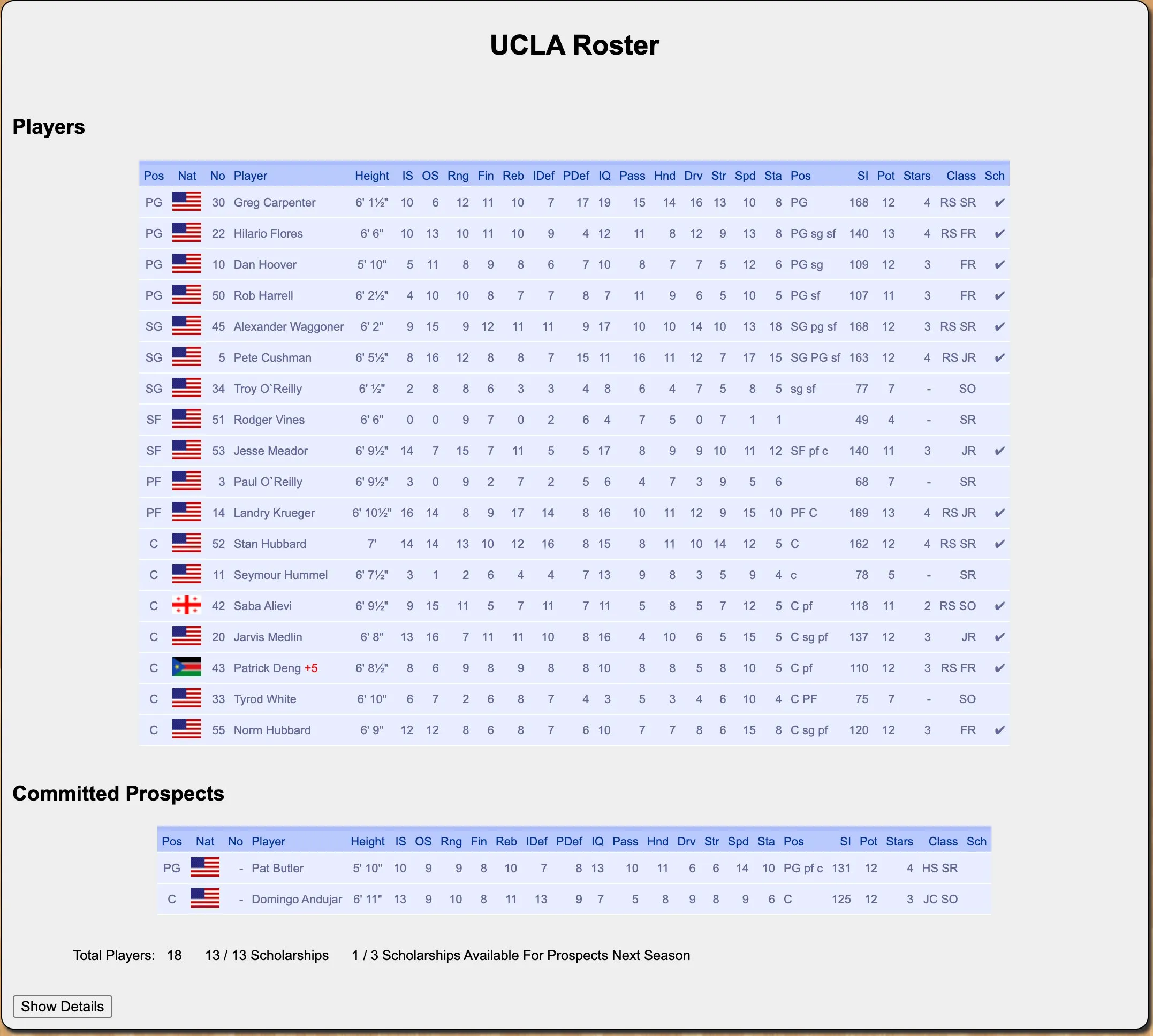 UCLA’s roster in February 2046: 18 players, 13 of 13 scholarships used, two committed prospects. Note the redshirt seniors (RS SR) carrying the team with SI around 168. Walk-ons without the scholarship tick sit at SI 49–78. Capture: our headless Chrome, Wayback Machine snapshot.
Development you can watch. The public Player Development page marks each skill that rose at the last update with a green arrow. In UCLA’s February 2046 snapshot, almost every young player gained one or two skills and an SI point or two. That is slow, steady growth, so four years of development really matter.
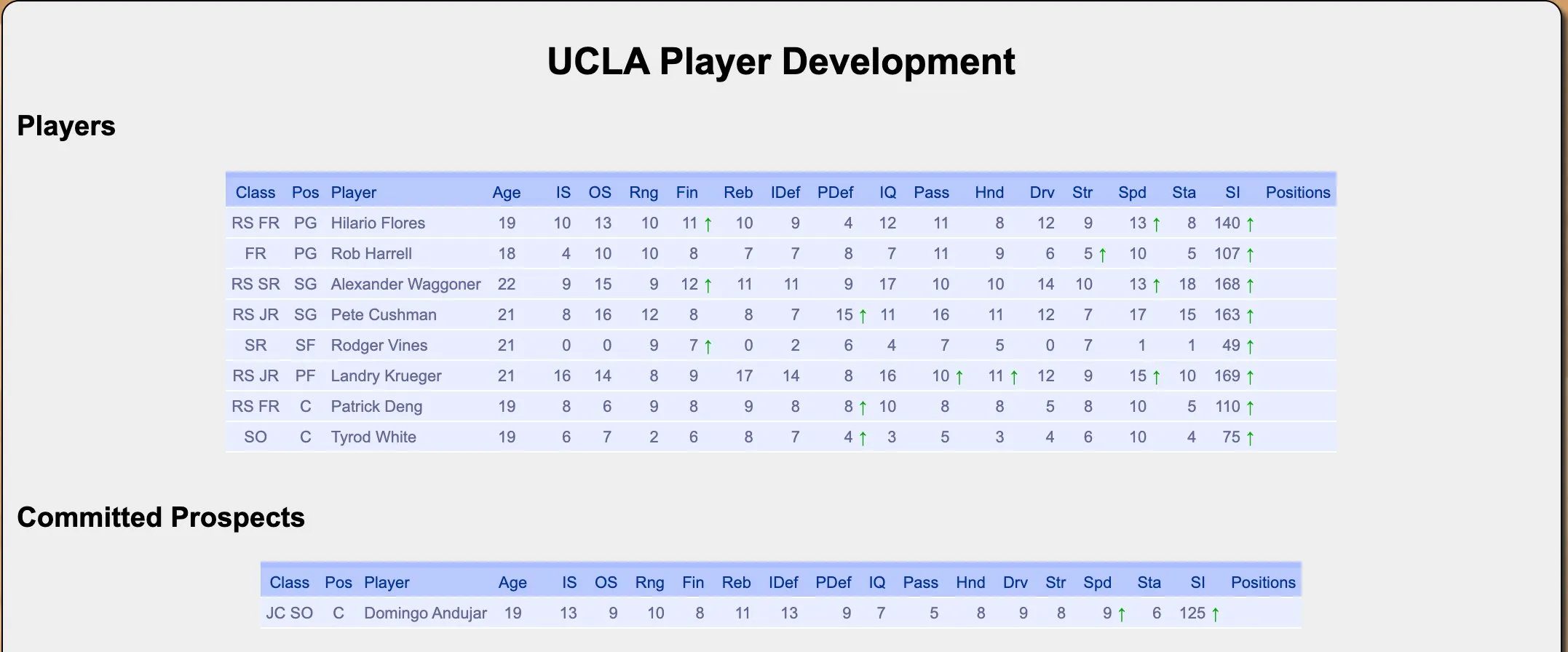 The development tracker: green arrows mark skills that rose at the latest twice-weekly update. Landry Krueger (RS JR, PF) gained in passing, handling and speed in a single update. Capture: our headless Chrome, Wayback Machine snapshot.
Missing. There is no morale, chemistry or personality system, and players never complain about minutes. Recruits do care about playing time, though: they avoid rosters full of highly rated young players at their position, and they look down on programs with a history of redshirting top recruits. The rules mention a “Player Roles” idea only as a 2025 suggestion-forum thread, not as a feature.
Front office: recruiting is the economy
Our scoring grid asks about cap rules, contracts, trades and finances. Hardwood has none of them, and that is a deliberate college-sports design. Here is what replaces them:
- Scholarships. 13 per team, plus walk-ons you don’t control. Once next season’s scholarships are all committed, nobody else can commit.
- Recruiting points. Your budget. You get a large amount at the start of the season and two points per daily update. You can bank at most 45. Anything above 10 left unspent at the end of recruiting is halved for next season. Contacts with younger prospects have a soft cap, so you can’t simply flood them.
- Offers. A prospect can only commit if you have offered him a scholarship. Pulling an offer resets your relationship with him.
- Commitment. It is probabilistic, not winner-takes-all. Your chance depends on his interest level, so the rules tell you to keep a plan B.
- Interest fog. You see your own interest levels in detail (Low, Low+, Low++… up to Very High). Rivals’ levels show only as Low, Medium or High, so you never know for sure whether you are ahead.
- Success factors. Conference level, prestige, how early you made contact, your coach’s recruiting rating, geography (in-state and in-region bonuses across 25 regions, from “USA Arctic: Alaska” to Oceania), immediate playing time, and random factors. Division 2 and 3 schools struggle to land 4- and 5-star players.
- Three pipelines. High school prospects can be recruited from age 14 and commit as seniors. Junior college players are recruited from 18 and arrive as juniors. International prospects are recruited for one year at 17.
- Coaching staff as payroll. Coaches have salaries (UCLA’s head coach earns $3.85M), but we found no team budget or finance screen. Arena capacity limits “the income each game can generate”, according to the rules, but there are no ticket prices or sponsors to manage.
- Arena. Fixed by the real school. UCLA plays in Pauley Pavilion, capacity 10,000. There is nothing to build or upgrade.
- Job security. For human managers, the only documented way to lose a team is inactivity (35 days) or breaking the rules. Bot schools, the rules say, can fire an underperforming head coach depending on alumni mood.
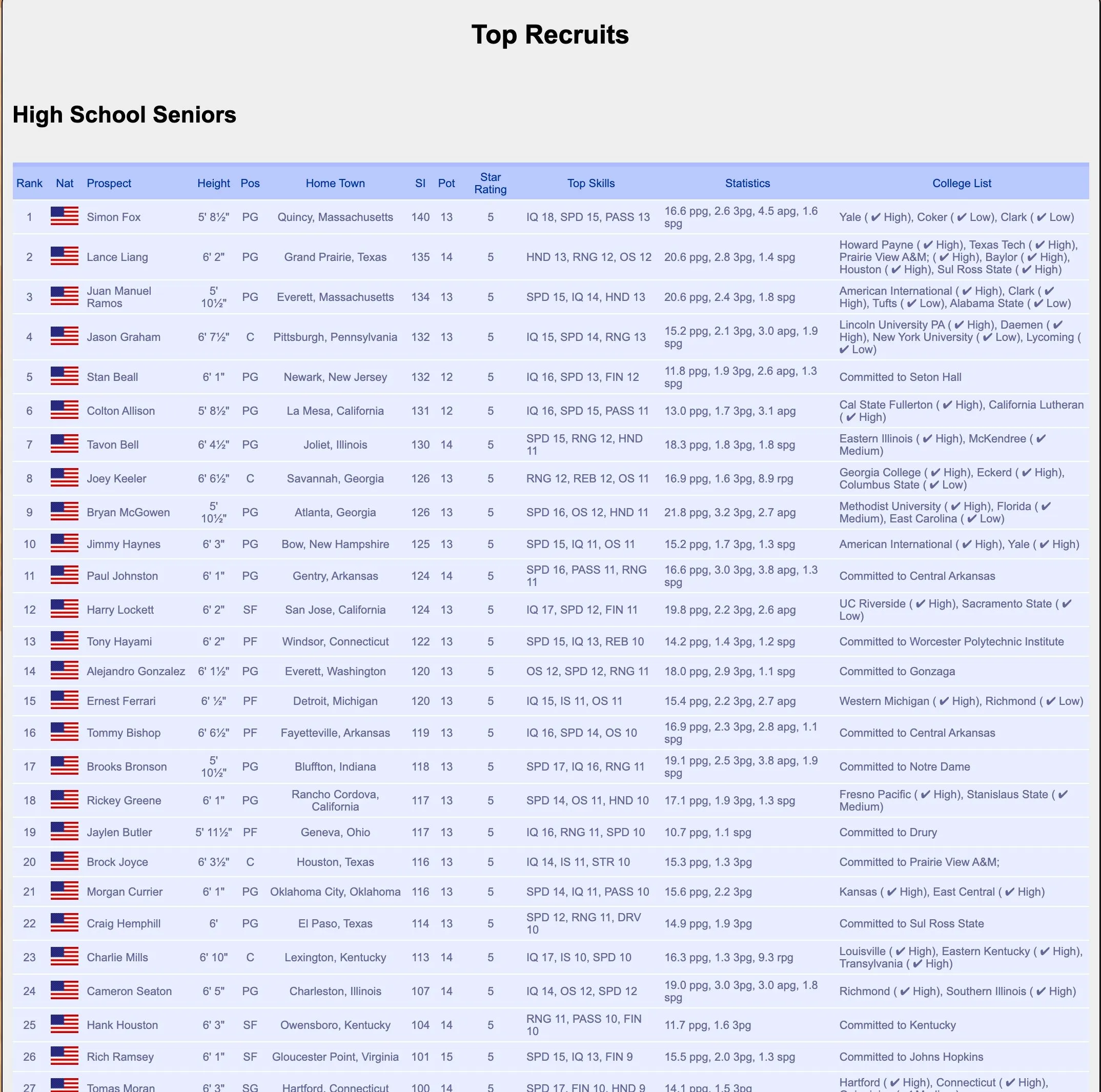 The public Top Recruits board for high school seniors (December 2045). The #1 prospect, 5’8½” point guard Simon Fox, is being chased by Yale (High), Coker and Clark. Yale won: the conference log records his commitment on February 1, 2046. Note how many top-50 recruits are already “Committed”. Capture: our headless Chrome, Wayback Machine snapshot.
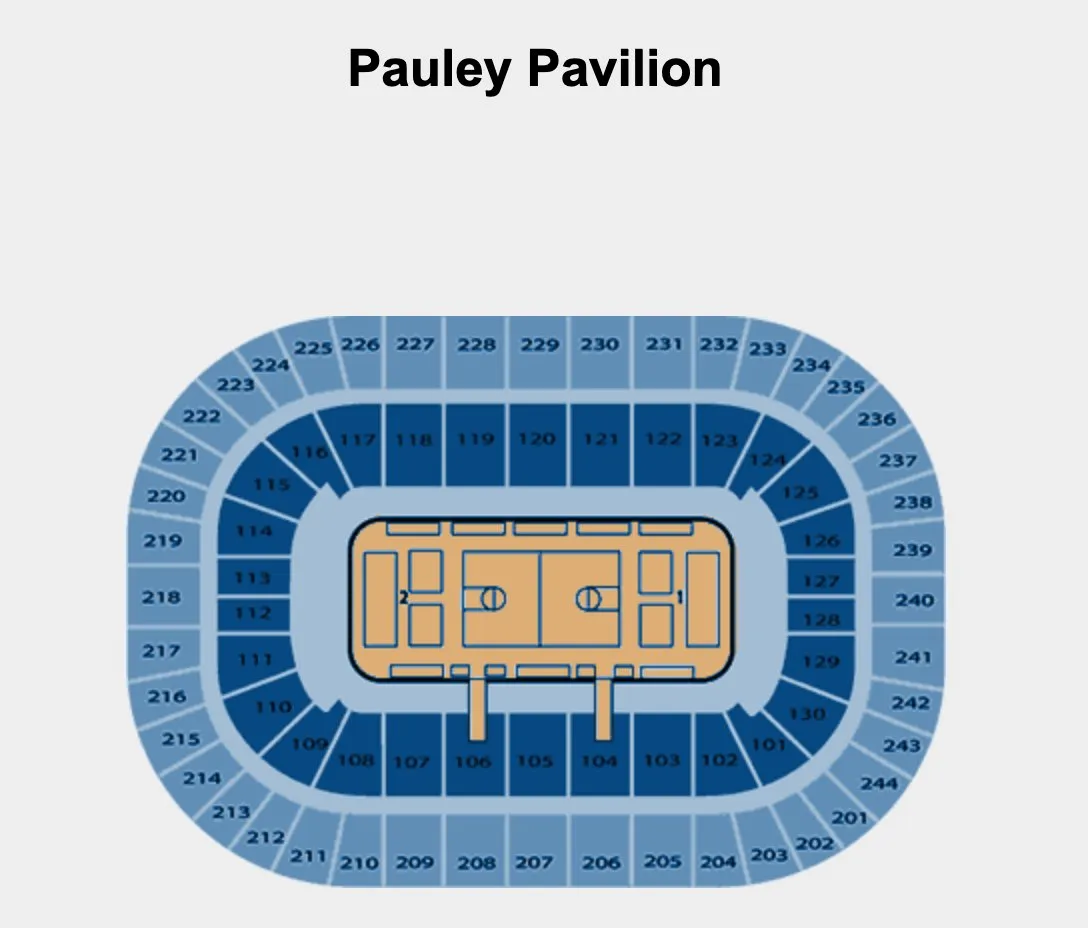 Pauley Pavilion, capacity 10,000, as seen on UCLA’s arena page. Arenas set attendance limits and game income, but there is no ticket pricing or expansion to manage. The schedule shows it sold out for big conference games. Capture: our headless Chrome, Wayback Machine snapshot.
The draft and the pros. The best college players go into a simulated 30-team pro draft named after real NBA cities. It is a story layer, not a mechanic you control. The rules say pro games are “just simulated to see how players continue to develop” and have no effect on college teams. Seeing a player you recruited at 14 go in the first round is still one of the game’s small pleasures, and being drafted also makes him eligible for your Hall of Fame.
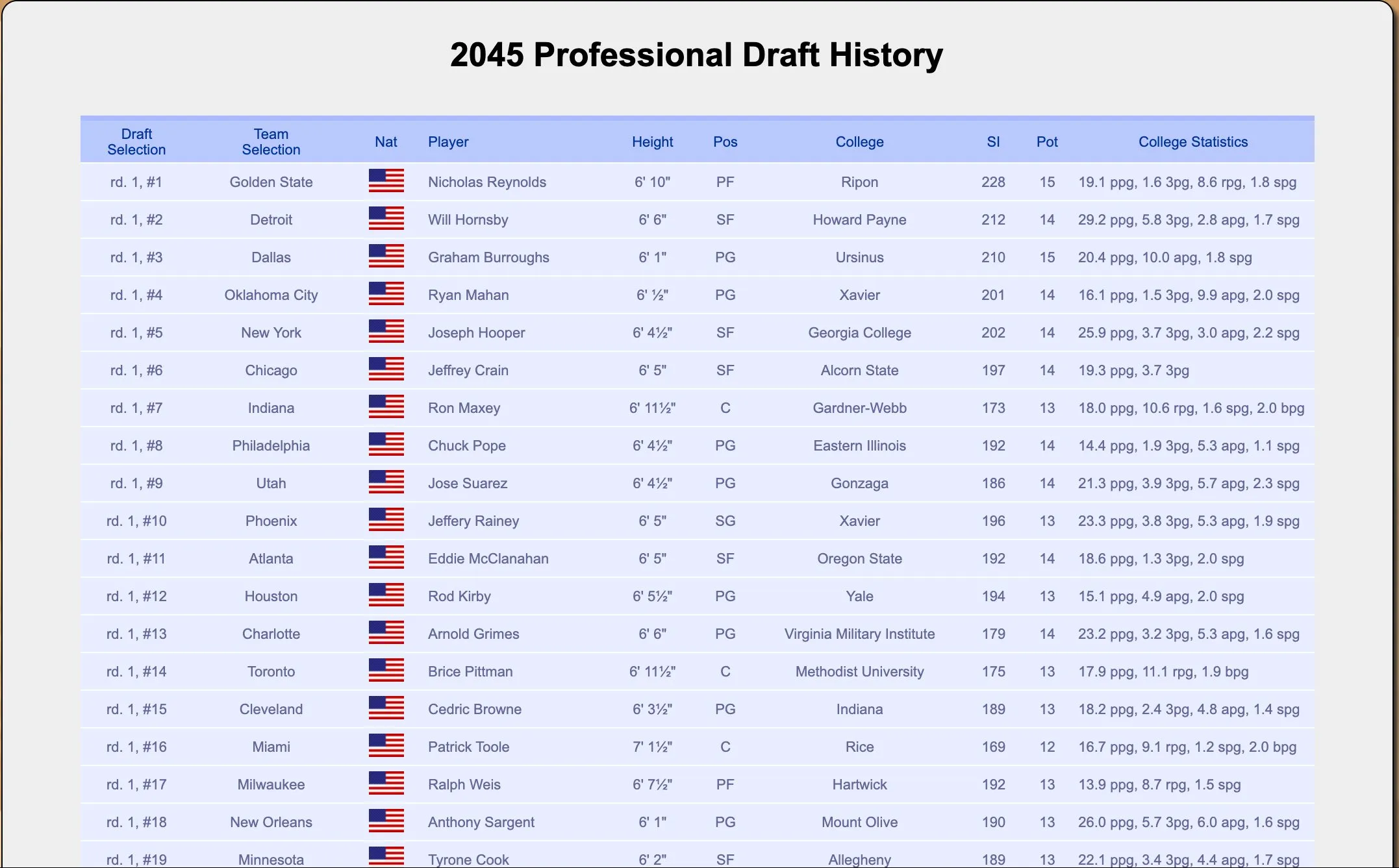 The 2045 pro draft: Golden State took Ripon power forward Nicholas Reynolds (SI 228) first overall. Small schools such as Ursinus, Howard Payne and Georgia College fill the top five, proof that the pyramid’s top players don’t all come from big names. Capture: our headless Chrome, Wayback Machine snapshot.
Our verdict on the front office. As a college game, this is coherent and genuinely strategic. As a “front office” in our scoring sense, it is narrow: one resource (recruiting points), one constraint (scholarships), one personnel market (coaches). That is why it scores 5.5 here, while recruiting pushes the players score up.
World and longevity
The league structure. Schools are real colleges and universities in their real cities, with their real mascots, arenas and colours. The rules forbid relocating or renaming them (“Can you image the Univ. of Kentucky Bulldogs wearing red jerseys?”). Players and coaches are fictional, so in our classification the data is real but unlicensed. The pyramid doubles at each level: one level-I conference, two at level II, four at level III, and so on. Each conference has 16 teams. Labels such as “VI.32” in the forum suggest the doubling continues to level VI. If so, that is 63 conferences and 1,008 programs, of which almost 800 were managed by humans in August 2025, according to the home page.
Competitions. Conference regular-season titles, conference playoffs, three 64-team national tournaments, invitational groups, a weekly Top-25 poll, RPI and strength-of-schedule rankings, conference awards, All-Americans, Player of the Year and Freshman of the Year.
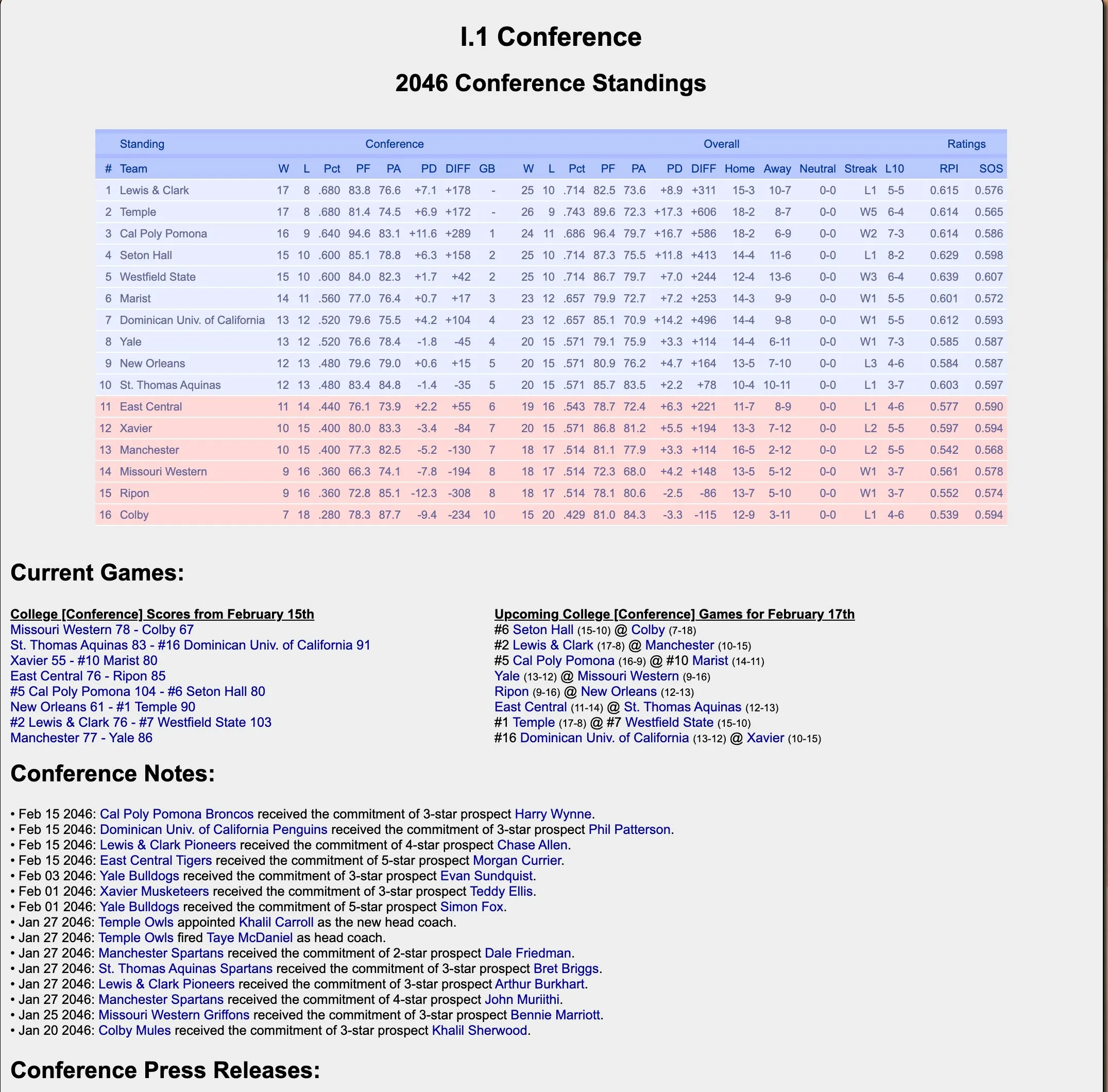 Conference I.1, the top of the pyramid, on February 15, 2046. The red rows mark the bottom six, who will be relegated. Lewis & Clark and Temple lead at 17-8. Below the table, the conference log mixes results, coaching changes (Temple fired its head coach on January 27) and recruits’ commitments. Capture: our headless Chrome, Wayback Machine snapshot.
History. Everything is kept: each team’s season-by-season record, coach, president, conference, finish, playoff and tournament result, RPI and TPI. There is also a team Hall of Fame (players need 90 games, an SI of 165+, or to have been drafted; coaches need 150 games at .400) and a site-wide Hall of Champions. UCLA’s history shows the pyramid working as intended. The Bruins went 3-27 in conference I.1 in 2040, were relegated, and reached the Final Four from level III as a #9 seed in 2043.
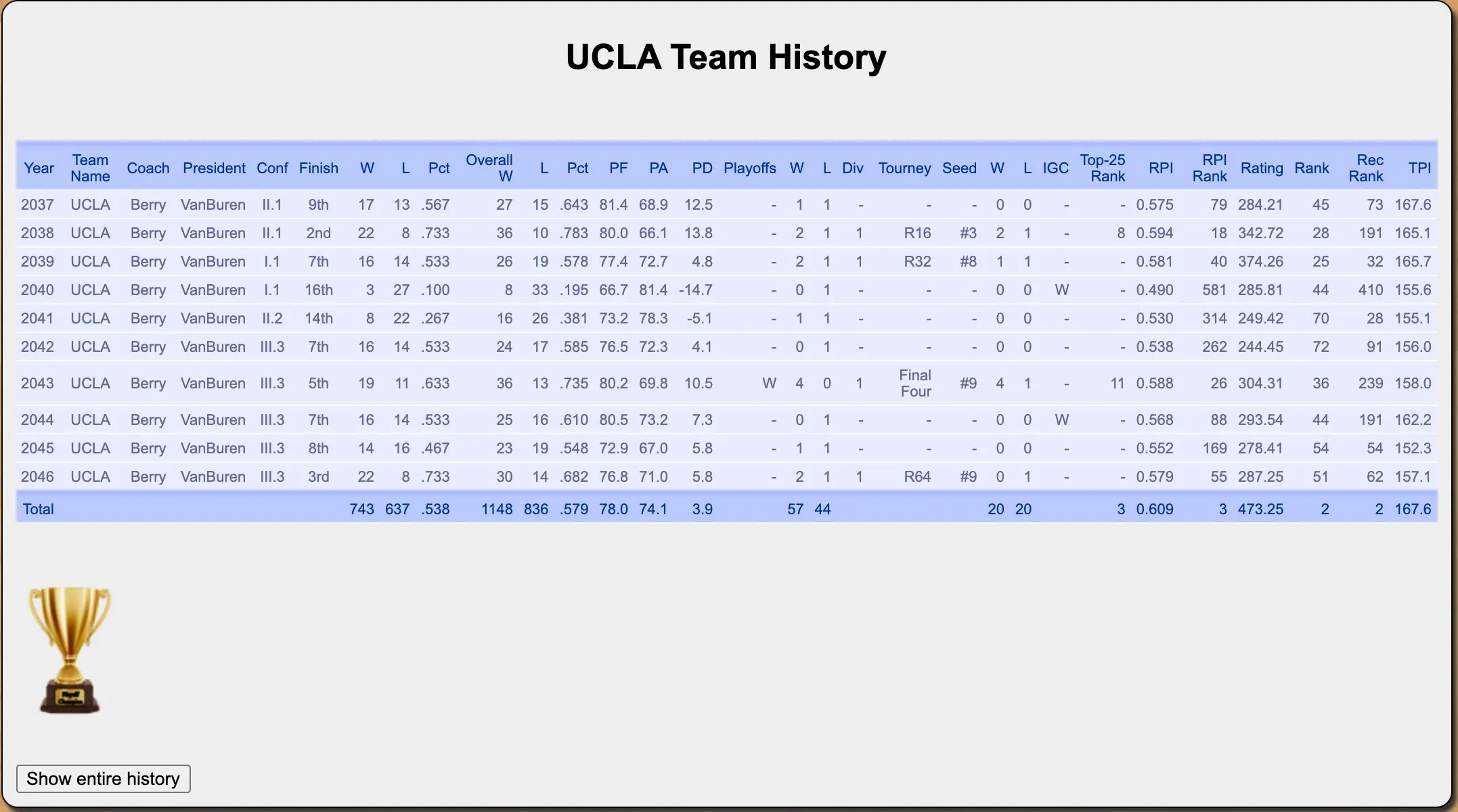 Ten seasons of UCLA under the same human president, VanBuren (in charge since April 2018). From a 3-27 collapse in I.1 (2040) to a Final Four as a #9 seed from III.3 (2043). All-time totals: 1,148-836. Capture: our headless Chrome, Wayback Machine snapshot.
Time scale. In January 2020 the admin announced the “2010 Season Flip”. By July 2025 the calendar had reached 2046-47. That is about 36 seasons in five and a half years, or roughly six and a half seasons per real year. UCLA’s Hall of Fame already honours a player from the 2000–2003 seasons, “from the earliest years”. The site is persistent, so there are no save files to lose. Your “save” is your login.
Editing and customisation. There is no league editor. After six months with a team you can give your head coach and players custom nicknames. The code of conduct also covers custom names, mascots and logos (logos must be 200×200 PNG).
Interface, platforms and performance
- Platform. Desktop web browser. There is no app on the App Store, Google Play or Steam. The layout is a fixed-width 2009-style page with a hardwood-floor background, a header and a long left menu. It is readable on a laptop. We did not test it on a phone, but it was clearly not designed for one.
- Speed. You don’t simulate anything yourself. Games run on the server at fixed times, so how fast the game moves is set by the calendar, not by your machine. The archived pages are light and load quickly.
- Data access. It is excellent and public. Any team’s roster, coaches, development, depth chart, schedule, stats, history and transactions can be read without logging in, which also makes scouting your conference rivals easy. Tables are dense and some can be sorted. A small cost: abbreviations such as TPI, DIST and PITP are explained only in the manual, or not at all.
- Languages. The interface is English only, as far as we could see. One welcome detail: since 2019 you can show heights in feet and inches, inches only, or metres with weight in kilograms. The forum has German, Spanish and Italian sections, small but real.
- Onboarding. There is a long manual (“Rules”), a ten-step newbie checklist, a wiki link and the forum. In 2020 a new player wrote that “the main issue is a lack of information and lack of quality guides”. The rules have grown since then, but there is still no in-game tutorial.
- Offline, cloud, cross-device. Everything is server-side. You need a connection, and your team follows your account to any browser.
- Login fragility. A 2022 comment on a game directory shows the other side of a one-person operation: a player locked out after his tablet died couldn’t email the admin without logging in.
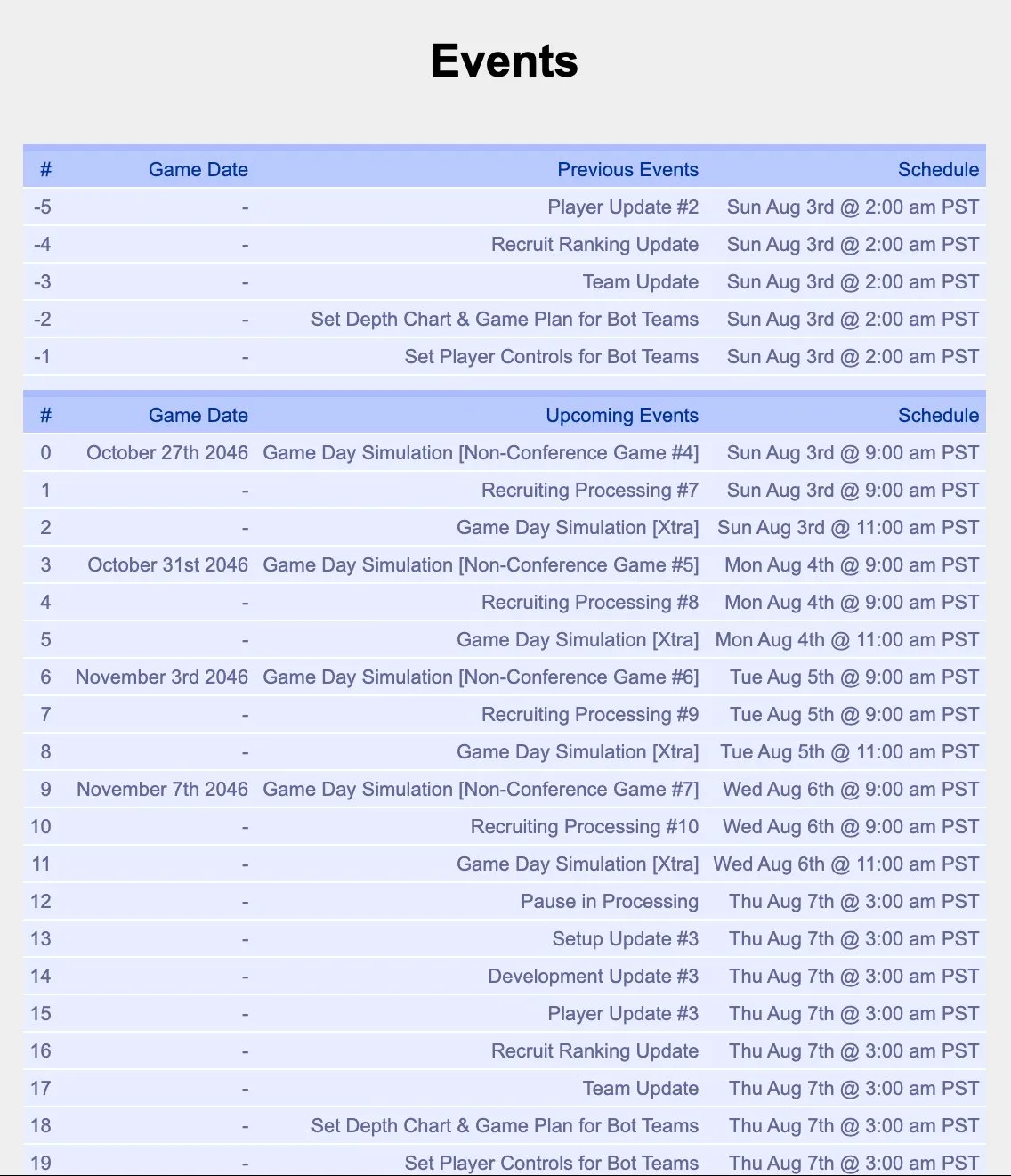 The Events page is Hardwood’s heartbeat: a game sim at 9:00 am PST, recruiting processing right after, an “Xtra” sim at 11:00 am, and twice-weekly Thursday/Sunday blocks of development, player and bot updates. Capture: our headless Chrome, Wayback Machine snapshot (August 3, 2025).
Monetization, line by line
| Item | Price | What it gives you |
|---|---|---|
| Registering a team | Free | One college program (one per person is recommended; sharing a computer must be reported to the admin) |
| Advertising | None | The About page: Hardwood “is intended to be entirely free and is devoid of all advertising” |
| Premium membership / supporter tier | Does not exist | We found no paid tier anywhere on the site, in the rules or in directory listings |
| In-game currency, packs, energy | Do not exist | Recruiting points are earned by schedule only, the same for everyone |
| Buying or selling players, coaches or wins | Prohibited | Rules, “Gambling & Payments”: leads to “the loss of your team” |
Fairness verdict. It is as clean as a game can be. There is no pay-to-win, there are no ads and there are no loot boxes. The only “currency” is recruiting points, and everyone earns them at the same rate. Data collection is minimal too: the privacy policy says only a name and email address are collected at registration. The obvious question is sustainability. The site is a one-person project hosted on a commercial host, with no visible revenue. That is not a flaw we can score, but it is a risk worth knowing about before you invest years in a program.
Update history
Hardwood has no public changelog. Here is what we could reconstruct from official posts and archived pages.
| Date (real world) | Game season | What changed |
|---|---|---|
| Late 2017 | — | Beta testing begins (home page). The admin account dates from January 24, 2017. The privacy policy, dated December 30, 2009, is inherited from sister game Broken Bat |
| 2018 | — | Official launch of Hardwood Online College Basketball (OCB) |
| August 25, 2019 | 2007-08 | Opponent field-goal percentage (OFG) and other defensive stats added |
| October 4, 2019 | 2008-09 | Expanded recruit interest levels. Fewer foul-outs (“defense suffers” in foul trouble). Height and weight units: feet/inches, inches or metric |
| October 25, 2019 | 2008-09 | Change to the redshirt game-management setting to respect the five-game limit |
| February 20, 2020 | 2010-11 | The developer: “Hardwood hit parity with Broken Bat….both games have 550 active user!” |
| May 2–5, 2020 | 2011-12 | Server platform upgrade “for increased stability” (60–90 minutes downtime announced) |
| July 2020 | 2013-14 | Divisional recruiting restrictions proposed. A player-run vote ran 10 for, 20 against. The 2025 rules say Division 2 and 3 teams find it “very difficult” to land 4- and 5-star recruits |
| August 2025 | 2046-47 | Home page counts “almost 800” managed teams and 1,100,567 simulated games, up from about 700 teams and 902,241 games in the text GM Games still shows |
| Open in 2025 | — | Suggestions: player roles, in-depth rotation builder, cutting players, national teams (open since 2020), a college football spin-off |
There is no public roadmap. The suggestions forum (548 threads in August 2025) is the closest thing to one, and the admin was still replying to it in March 2025.
What players say
Ratings. On GM Games, Hardwood had an average user rating of 8.6 from 108 votes and no written reviews when we checked on November 14, 2026. On the browser-game directory NewRPG it had 4.61 out of 5 from 59 votes. There are no store ratings, because there are no store apps.
Positive themes.
- Recruiting as the hook. “Games pretty much every day, recruiting is fun, it isn’t impossible to build a solid team early on” (NewRPG comment, August 2020).
- Better than the alternatives. One long-time forum regular called it “the best college basketball game and IMO the best basketball management game on the net” (official forum, October 2019).
- No building, no buying. The same player liked that there is no stadium or training facility to grind and that “trying to buy players is a turnoff. The recruiting here is a much better system” (October 2019).
- Depth versus single-player college games. “I think HW has more nuance and depth to it than the games I played” (October 2019).
- Filling a gap. After the college sports games went off consoles, “the fun of recruiting is difficult to find” elsewhere, a player noted (February 2020).
- Community. “A good community of people that are happy to give advice to new players” (NewRPG, August 2020).
Negative themes.
- Onboarding. “The main issue is a lack of information and lack of quality guides” (forum, July 2020).
- No in-game coaching. Changes only “at halftime and it needs to be preset” (October 2019).
- Rule changes that split the community. The 2020 divisional-recruiting debate ran to 96 posts. One player summed up the mood: “But this isn’t a democracy” (July 2020).
- Opaque results and development. 2025 thread titles include “So many scholarship players regressing”, “is my team just bad or is something wrong that shouldn’t be” and “Why does my team absolutely stink some days” (Discussions and Help indexes). The regression complaints fit the scouting-fog rule, where displayed ratings drop as they get more accurate, but the game doesn’t make that obvious.
Activity signals. In August 2025 the forum had 121 announcement threads, 830 help threads, 735 discussions, 548 suggestions and 308 bug reports, with posts on the same day we captured it. A “Who’s online” snapshot from July 10, 2025 shows 12 users online at once. User press releases fill the news page with trash talk and in-character interviews. It is small and close-knit, more a long-running club than a mass-market game.
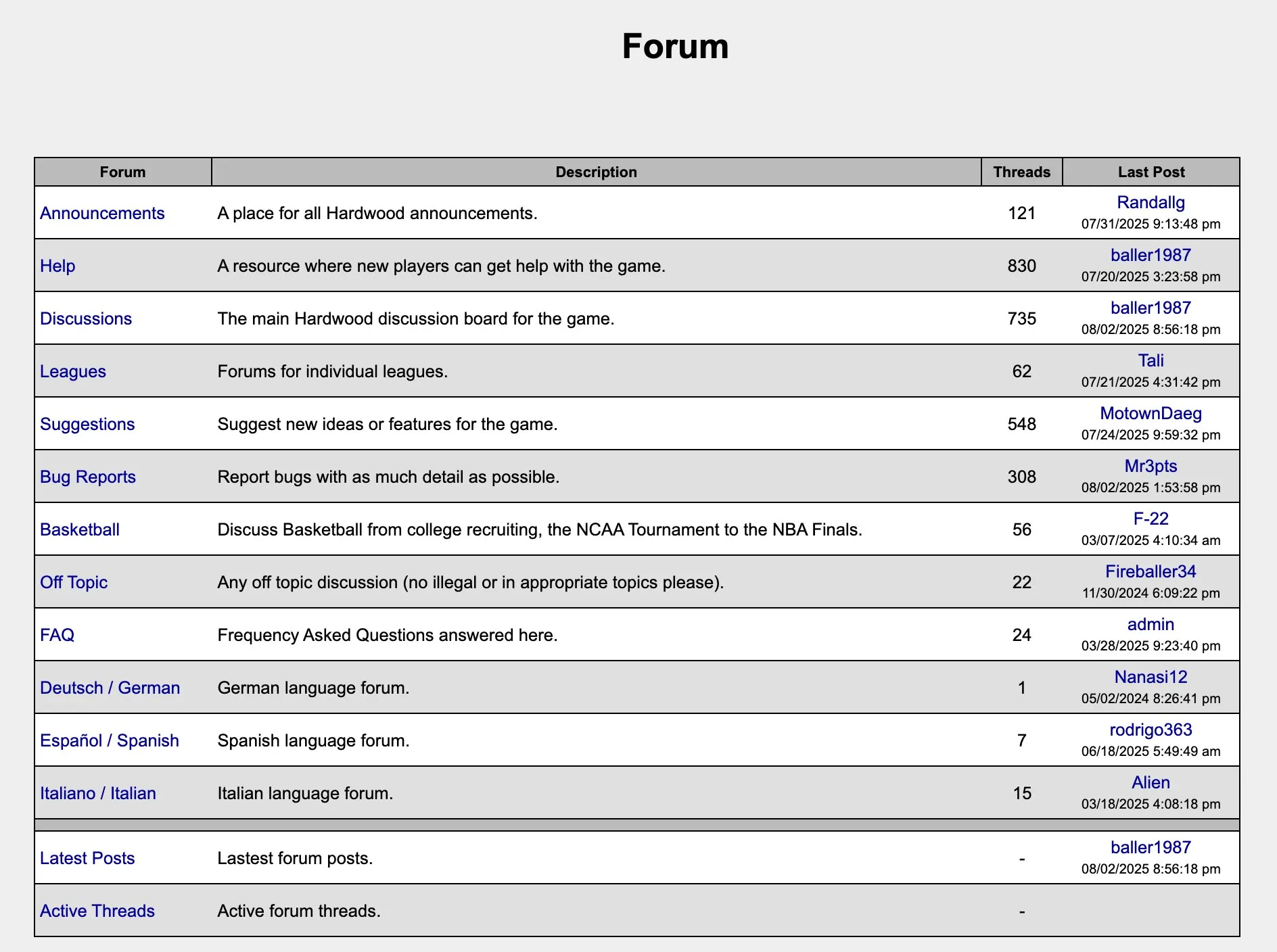 The official forum on August 3, 2025: 830 help threads and 735 discussions, last posts within hours, plus small German, Spanish and Italian rooms. The Help board being the biggest says a lot about the learning curve. Capture: our headless Chrome, Wayback Machine snapshot.
Known issues and bugs
These come from bug-report thread titles on the official forum (2024–2025). We could not read most threads in full.
- Game viewer errors. “Not Able to view games receiving this error on multiple Devices” (22 posts, August–September 2024).
- Play-by-play glitches. “pbp shot-clock error” (January 2025, answered by the admin).
- Records and stats. “Coach record glitch” (August 2024 to February 2025), “Stats Incorrect” (March 2025).
- Redshirts. “Player dont RS” (March 2025). A 2019 change had already tightened redshirt handling after players complained that redshirted players were entering games.
- Recruiting points. “No new recruiting points” (January 2025) and “recruit points” (September 2024).
- Data oddities. “Injury Dates Not Lining up” (December 2024, admin replied) and “Marist arena name” (March 2025, admin replied).
- Disputed engine logic. “where is the logic, math?!” (85 posts, still active in May 2025).
- Policy. Bugs are fixed when possible, but results stand: “it is impossible to go back and re-play specific games… all results are final” (Rules).
- Access. The site is now behind a Cloudflare check. That is fine for normal browsers, but it blocks scripts and some privacy setups, and the code of conduct forbids crawlers and data-mining tools anyway.
Tips for your first season
- Follow the ten-step newbie checklist in order. Depth chart, then game tactics, then individual controls, then recruiting. The default plans you inherit were set for a bot.
- Spend your recruiting points early. Contact duration is a success factor and only 45 points can be banked. Anything above 10 left at the end of recruiting is halved (Rules).
- Recruit locally and realistically. In-state and in-region prospects get a bonus, and lower divisions struggle to sign 4- and 5-star players. A forum veteran described “2 4s” as a better buy than spending 180 contacts on the #1 recruit (July 2020).
- Keep a plan B. Commitments are probabilistic, and rivals’ interest levels are hidden behind coarse labels. Never use all your offers on one target.
- Don’t fire your head coach mid-recruiting. Prospects are tied to him. If you must change coaches, do it when your recruiting board is quiet.
- Don’t ride your starters to 40 minutes. Overwork lowers performance for the rest of the season. Use the substitution patterns and the ~32-minute setting instead.
- Redshirt with intent. Tick the box, take the player off the default depth chart, and add him only to specific game plans if you want him to get a few games. That is the rules’ own recommended method.
- Schedule for RPI. Non-conference games and your Up/Down/Any mode shape your tournament résumé. Rivalry games need both human managers to list each other.
- Don’t panic over a falling rating. Displayed skills can drop as scouting noise clears. Check the Player Development arrows before deciding someone is regressing.
- Log in at least monthly. Inactivity of more than 35 days costs you the team, and new teams must be activated within 20 days.
Against the alternatives
| Hardwood Online | BuzzerBeater | Swish & Dunk | Basketball GM | Hoop Land | |
|---|---|---|---|---|---|
| Setting | US college (real schools) | Fictional clubs, national leagues | Fictional clubs, European-style leagues | NBA-style, real or random players | NBA-style + college, fictional |
| Multiplayer | Persistent online world | Persistent online world | Persistent online world | Single-player | Single-player |
| Engine / view | Text sim, box score + play-by-play | Text sim | Possession sim, 2D + text | Possession sim, text | Playable 2D games |
| Player acquisition | Recruiting only | Transfer auctions, draft | Auctions | Draft, trades, free agency | Draft, trades, free agency |
| Live control | None (preset halftime) | None | — | None | Full (you play) |
| Price model | Free, no ads | Free + optional subscription | Free, no purchases | Free with ads + optional subscription | Free with in-app purchases |
| Platforms | Browser | Browser | Browser, iOS, Android | Browser, Android | iOS, Android, Windows, macOS |
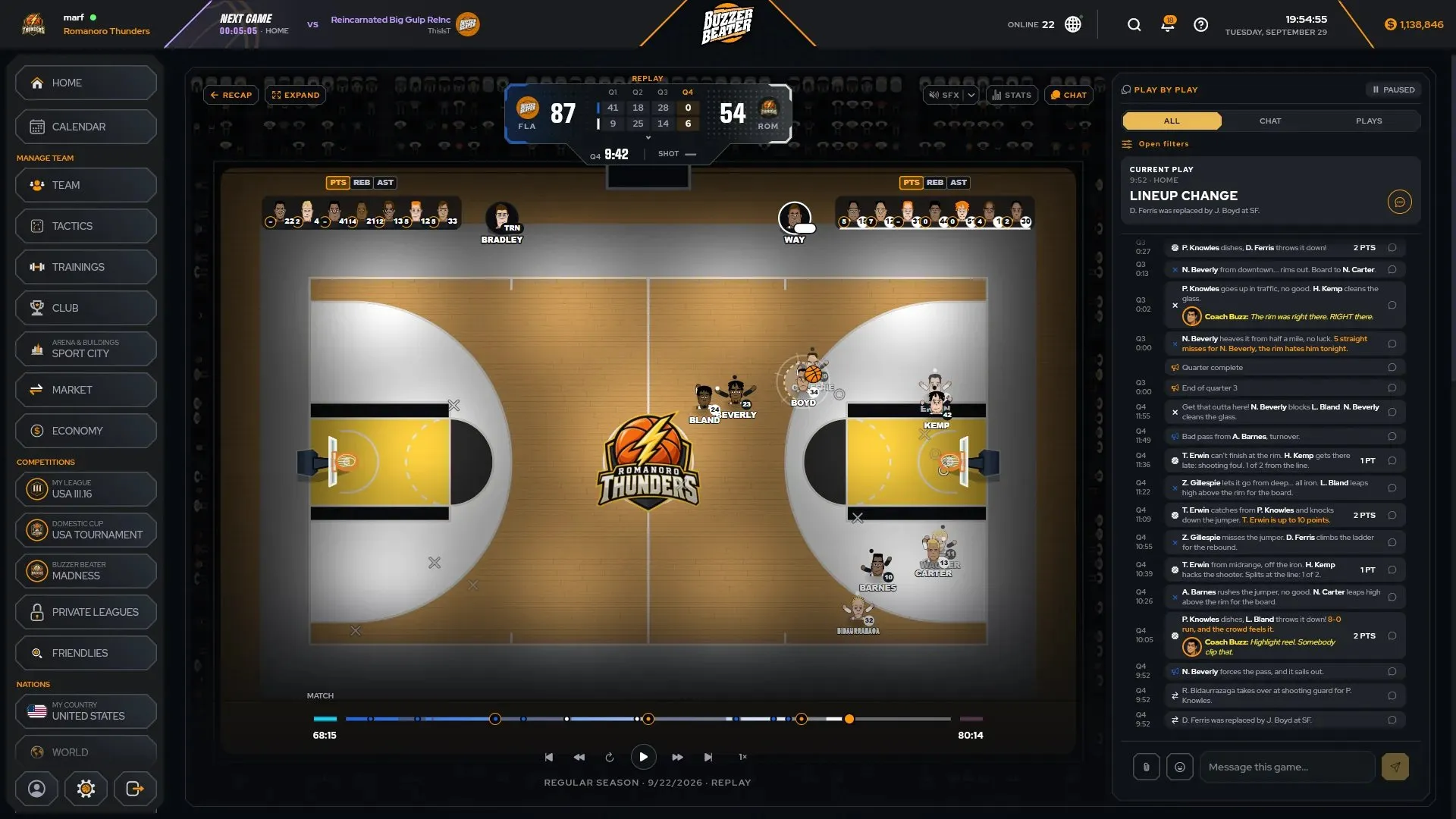
- BuzzerBeater is the closest relative: a persistent world, real people, patience as the main skill. It has a market and finances that Hardwood lacks, but no recruiting war (review).
- Swish & Dunk is the modern, phone-first online league, with tactical systems and a 2D view. It has a much younger world (disclosure: developed by our founder) (review).
- Basketball GM is the front-office reference: everything Hardwood’s front office is not (trades, cap, contracts), in single-player (review).
- Hoop Land has a college league and lets you play the games yourself, offline (review).
- For a paid desktop sim with deeper pro-style presentation, see Draft Day Sports: Pro Basketball (review) and Pro Basketball Manager (review).
None of them combines college recruiting with human rivals, and that is Hardwood’s whole reason to exist.
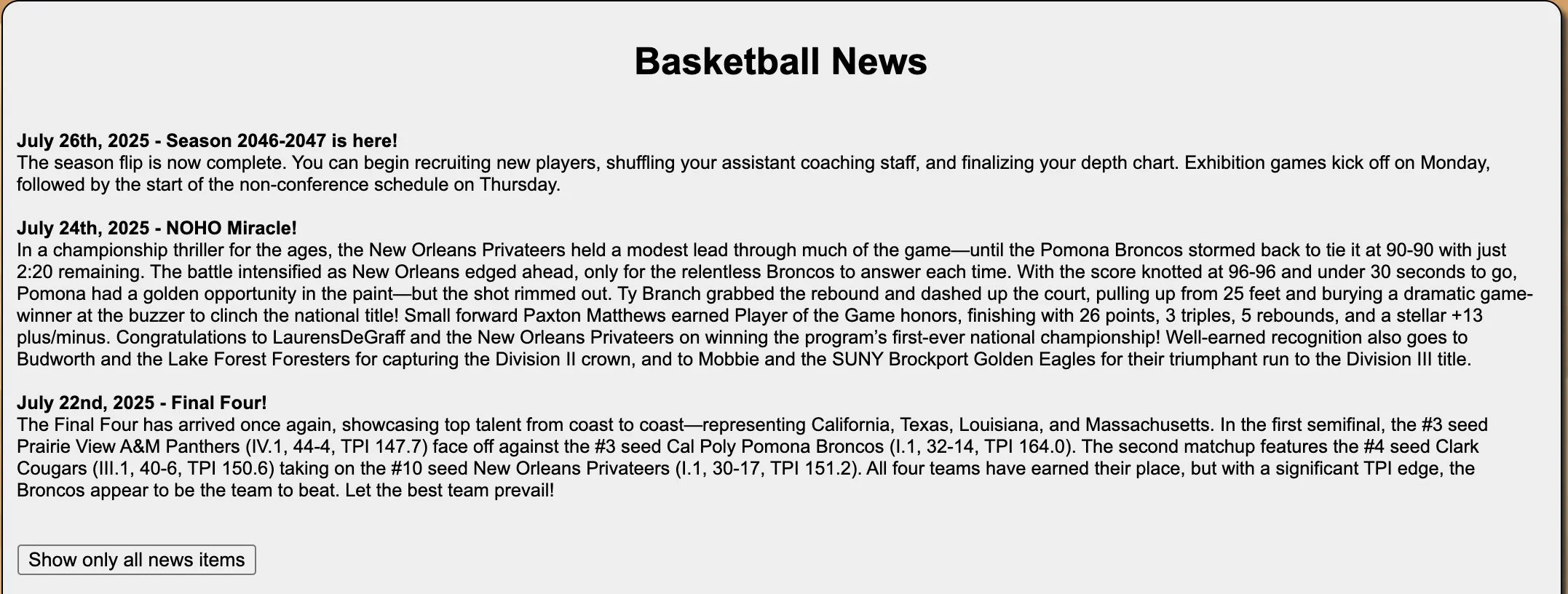 Official news from July 2025: the Final Four preview with each team’s TPI, the “NOHO Miracle!” title-game recap, and the season-flip notice. Small, but it is a living league with its own storylines. Capture: our headless Chrome, Wayback Machine snapshot.
Our take
Hardwood is the kind of game the internet used to be full of and now rarely produces. One developer, one server, no business model, and a thousand-school college basketball world that has been ticking forward once a day for years. What makes it more than nostalgia is that its design choices make basketball sense. College basketball is recruiting, development and preparation, not trades and cap space. Building the game around a contested recruiting market, scouting noise that clears with minutes played, and game plans you must commit to before tip-off produces the right feeling: you are a program builder, and your decisions pay off three years later.
Its weaknesses are just as clear. The front office is narrow by design, so anyone coming from Basketball GM will find nothing to negotiate. The engine is credible but a little high-scoring in our sample, and when results feel streaky, the game offers little to explain them. The interface is dated, desktop-only and offers newcomers only a long manual. And everything rests on one person, which is both why it is so coherent and why we can’t promise it will still run in five years.
We score it 7.6. That is a little above its weighted average, because no criterion captures how rare it is: a free, ad-free, human-versus-human college game that has worked for years.
Our wish list:
- A mobile-friendly layout. Even a responsive version of the current tables would bring in a new generation.
- A public changelog and an “engine explained” page to fill the rules’ “To Do…” sections. Halftime triggers and substitutions deserve documentation.
- Simple offensive identities: a few named sets (motion, pick-and-roll, post) layered on top of pace and inside/outside.
- A “recruiting rival” view after signing day, showing who won each battle and why.
- Transfers. The real sport now runs on the portal, and a limited transfer window would add a second market without breaking the recruiting core.
- Account recovery that doesn’t depend on being logged in.
Who should skip it: NBA-style GMs, live-game tinkerers, mobile-only players and anyone who can’t check in every few weeks. Everyone else who has ever argued about a recruiting class should register a team at their old school and give it two seasons.
Sources
Official (onlinecollegebasketball.org, read via Internet Archive snapshots, 2020–2025)
- Home page (August 2025)
- About Hardwood
- Rules / game manual
- Help index and Newbie Guide & Checklist
- Story of Hardwood and Links (developer credit, inspirations, hosting)
- Code of Conduct, Terms of Use, Privacy Policy, Site map
- News (July–August 2025), Events calendar, Who’s online, World
Official public league pages (captured)
- UCLA: team, roster, coaches, player development, depth chart, game tactics (login required), schedule, statistics, transactions, history, arena, Hall of Fame
- League: Conference I.1, Top Recruits, Recruiting Rankings, Top-25 Poll, 2045 pro draft, Hall of Champions
Community (official forum)
- Indexes: Forum home, Discussions, Suggestions, Bug Reports, Help, FAQ, Announcements (2019–2020), Italian section
- Threads: What’s new this year (’08-’09 season), 2019, Change to Red Shirt selection, 2019, Opponent Field Goal Percentage, 2019, Same number of users as Broken Bat, 2020, Server Platform Upgrade, 2020, Divisional restrictions to recruiting, 2020, Vote for the recruiting change, 2020
Directories and ratings
- GM Games: Hardwood Online College Basketball listing (8.6 user average, 108 votes)
- NewRPG listing and user comments (4.61/5, 59 votes)
Similarly named games (not related)
Data
Analysis by category
Match engine
Weight 20%7.0A possession-level engine that models fatigue, overwork across the season, foul trouble, injuries and positional experience, with play-by-play and box scores. In our archived sample, the top conference averaged 79.7 points per team in league play, against 72.6 for real Division I teams in 2024-25. Blowouts across tiers are common in non-conference play.
Coaching & tactics
Weight 11%8.0Among the richest in a browser game: pace, inside/outside emphasis, a man/zone/pressure percentage mix, defensive extension, four substitution patterns, conditional halftime adjustments, game-specific plans and five per-player controls. There are no plays or sets and no live changes.
Players & development
Weight 16%8.5Fourteen skills plus height, weight, wingspan and vertical, base and potential values, star ratings, physical growth during recruiting and scouting noise of up to 20%. Recruiting covers high school, junior college and international pipelines across 25 regions. There is no morale or chemistry.
Front office & salary cap
Weight 13%5.5There are no contracts, trades, transfers or finances. Your front office is 13 scholarships, a recruiting-point budget (45 banked at most), a head coach and three assistants with six ratings and salaries, plus a rule that limits you to one coaching hire per day. It suits college basketball, but it is a narrow puzzle.
League & world
Weight 9%8.0Real school names, mascots and locations in a promotion-and-relegation pyramid with three divisions, conference playoffs, 64-team national tournaments, invitationals, a pro draft, team histories, Halls of Fame and over 60 nations producing players.
Interface & UX
Weight 9%5.5Every page is public and data-dense: sortable tables, an events calendar, rankings and RPI/SOS. But the design dates from about 2009, it is built for desktop and has no app. The manual, a ten-step checklist and the forum are the only onboarding.
Longevity
Weight 6%8.5Running since a 2017 beta, the game calendar reached its 2046-47 season in July 2025. That is more than 30 simulated seasons in about five real years, with full history kept. The developer still answers bug reports.
Business model
Weight 6%10.0Free, with no ads, no premium tier and no purchases of any kind. The rules forbid buying or selling players, coaches or wins with real money.
Multiplayer ecosystem
Weight 9%8.0A small but steady human league: about 550 active users in 2020 according to the developer and almost 800 managed teams in 2025. The forum had over 2,700 threads in August 2025, plus Discord, chat and in-game press releases. Bot teams fill the rest.
Weighted average of the criteria: 7.5
Features
Game type
- Genre
- Online manager
- You play as
- General manager, Head coach
- Players & teams
- Real (unlicensed)
- League structure
- College
Match engine
- Simulation model
- Possession by possession
- Match view
- Box score
- In-game decisions (timeouts, subs)
- No
- Advanced stats (PER, TS%, +/-)
- Yes
- Shot charts
- Yes
- Fatigue
- Yes
- Fouls & foul trouble
- Yes
Coaching & tactics
- Offensive systems
- 0
- Defensive systems
- 3
- Zone defense
- Yes
- Full-court press
- Yes
- Playbook / play editor
- No
- Rotations & minutes
- Yes
- Individual player instructions
- Yes
- Opponent game plan
- Yes
- Team training
- Yes
- Staff (assistants, scouts, medical)
- Yes
Players
- Ratings per player
- 14
- Hidden potential
- Yes
- Progression & aging
- Yes
- Injuries
- Yes
Roster building
- Draft
- No
- Scouting (hidden ratings)
- Yes
- Free agency
- No
- Contract negotiation
- No
- Transfer market
- None
- Trades
- None
Front office & economy
- Fan satisfaction & attendance
- Yes
League & world
- Promotion & relegation
- Yes
- Season awards
- Yes
- League history & records
- Yes
- News feed & media
- Yes
Online & multiplayer
- Multiplayer type
- Persistent online world
- Match schedule
- One game per day
- Market shared with other players
- Yes
- AI runs inactive teams
- Yes
- Global leaderboards
- Yes
- Chat & forums
- Yes
Platforms & tech
- Playable offline
- No
- Account required
- Yes
- Languages
- 1
Monetization
- How it makes money
- Nothing: no ads, no purchases
Frequently asked questions
Is Hardwood Online College Basketball free?
- Yes, Hardwood Online College Basketball is completely free, with no purchases.
On which platforms can you play Hardwood Online College Basketball?
- Hardwood Online College Basketball is available on browser.
Is Hardwood Online College Basketball multiplayer?
- Yes, Hardwood Online College Basketball is an online multiplayer game: you compete against other human managers.
Does Hardwood Online College Basketball have real players and teams?
- Hardwood Online College Basketball includes real players, without an official license.
Can you play Hardwood Online College Basketball offline?
- No, Hardwood Online College Basketball requires an internet connection.
Who develops Hardwood Online College Basketball?
- Hardwood Online College Basketball is developed by Steve Muller (Solana Beach Design).
Is Hardwood Online College Basketball worth playing?
- The deepest free online college basketball manager we know of: a pyramid of real schools, a recruiting war against human coaches, detailed game plans and no ads or purchases at all. The interface is dated, there are no trades or contracts, and nothing can be changed during a game. (7.6/10)
What are the best alternatives to Hardwood Online College Basketball?
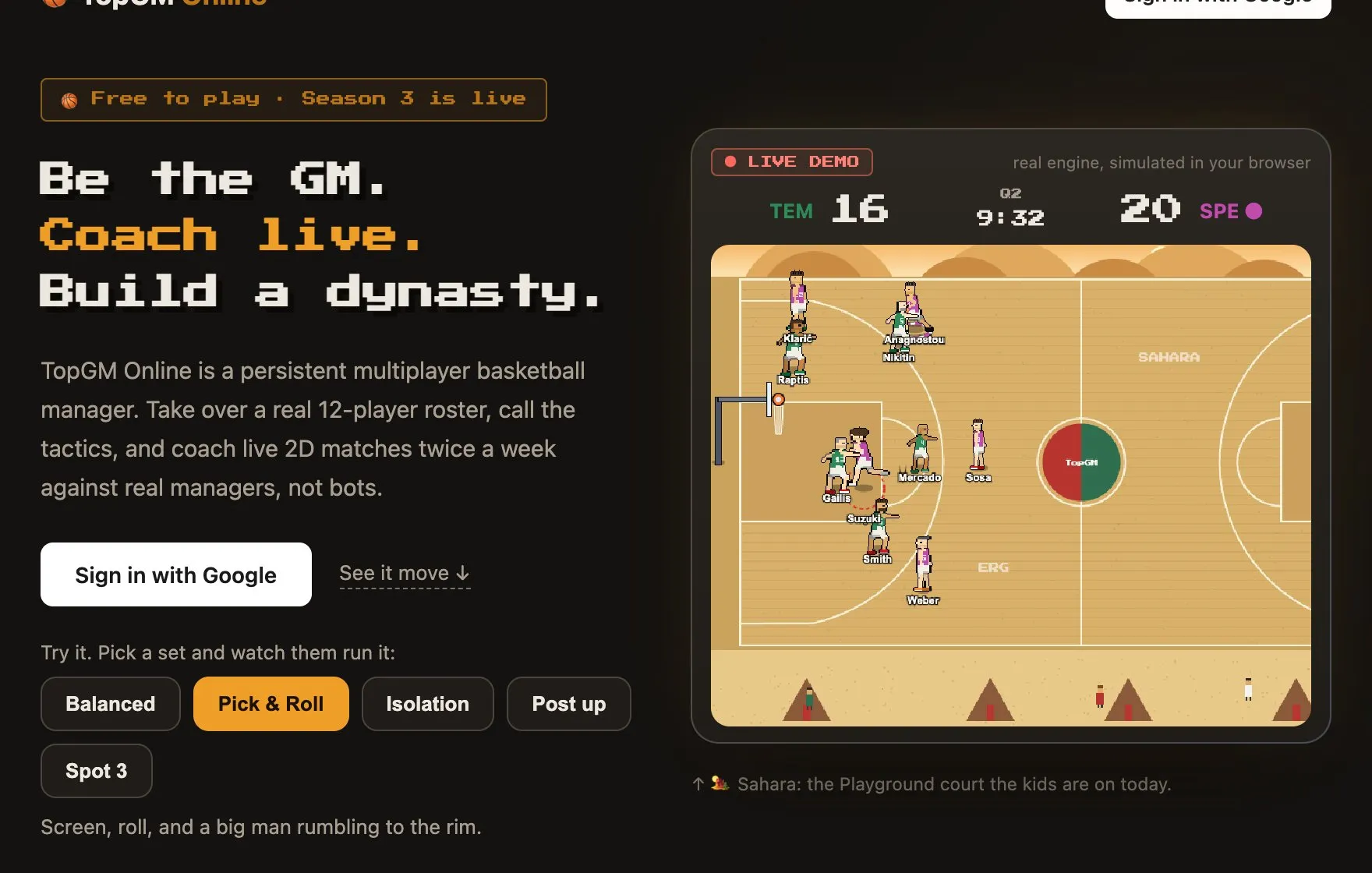
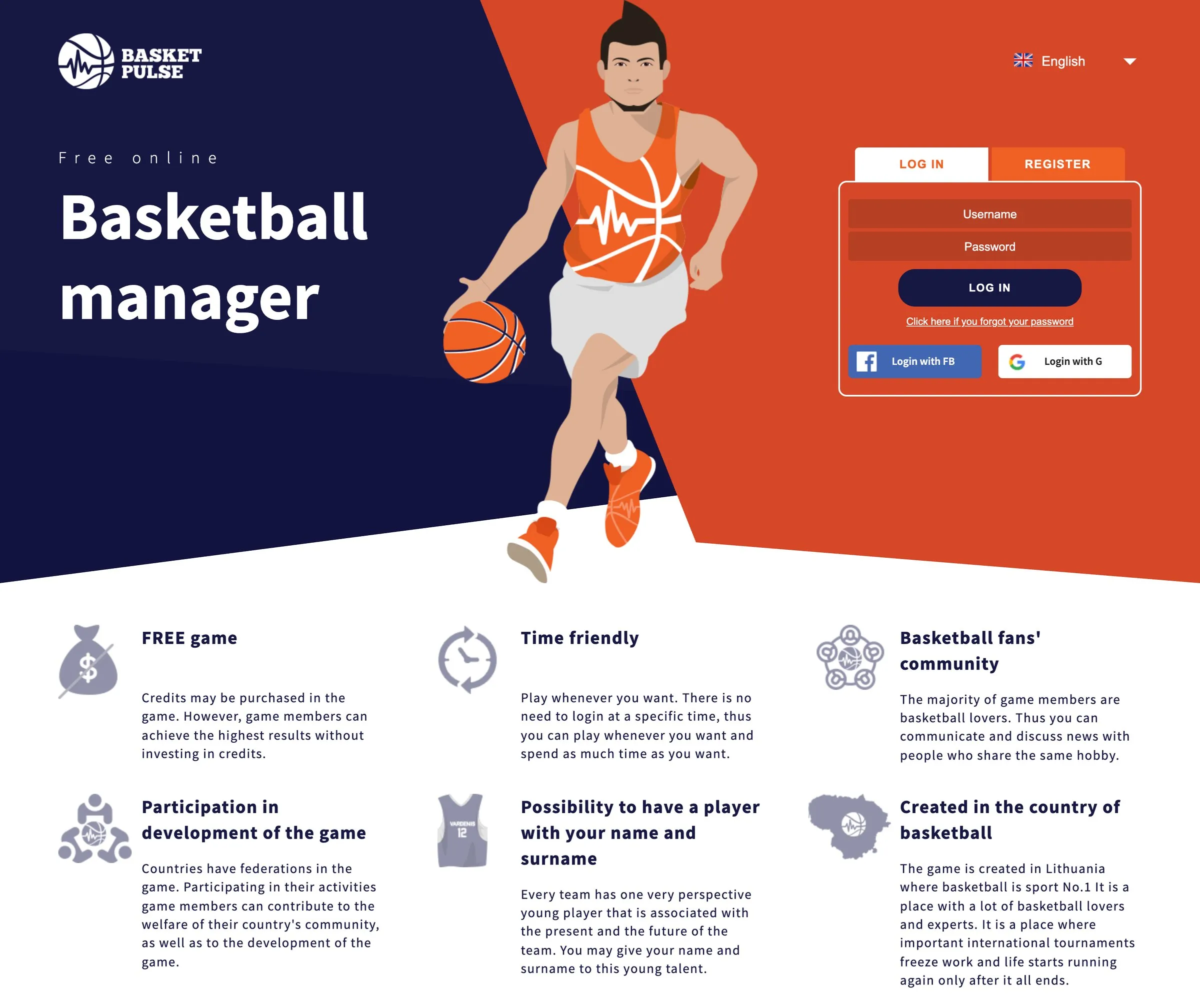
- The best alternatives to Hardwood Online College Basketball are BuzzerBeater (7.9/10), TopGM Online (7.6/10), and BasketPulse (7.5/10).